
Crystal rabbits, levitation, ghosts, and ancient wolves. It is a fantastic reality to comprehend in real time–any time, really. But then again, so is abuse, rejection, death, mourning, mental illness…and human trafficking. Where Dark Things Grow (Cowboy Jamboree Press), a debut novel by Poet Andrew K. Clark, is a battery of chilling narratives woven into one incredible story, folding in fantastic elements that provide the cognitive buffer readers might need to process all the uncomfortable issues addressed within the dark fantasies of revenge.
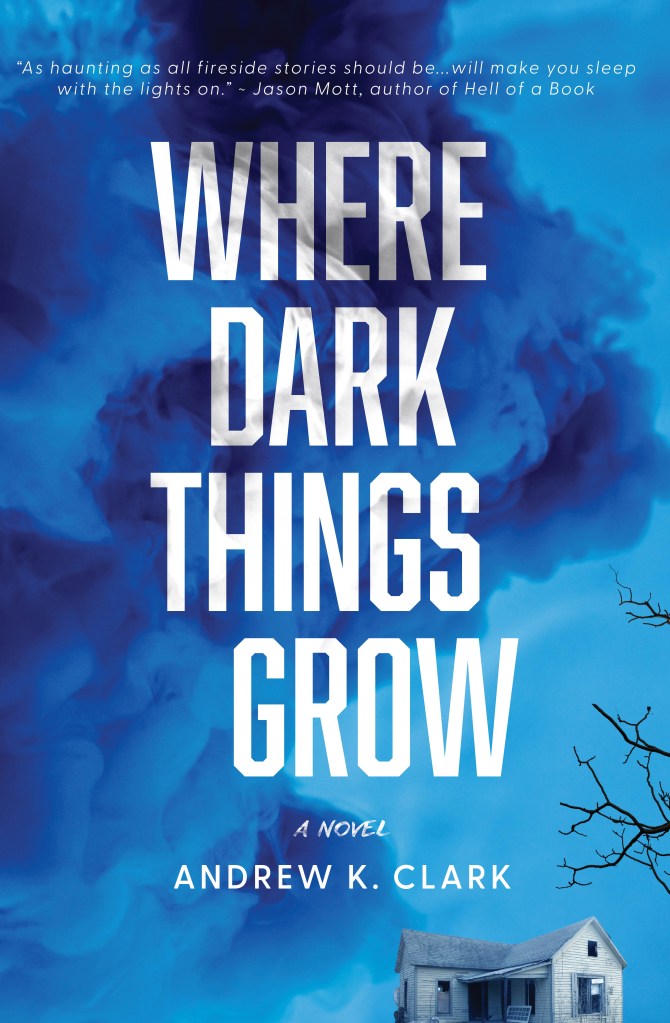

Not going to lie. I had to take a break from reading this book, but it was only because there is so much tension in this story, and that’s not a bad thing, especially for a horror story. Taking a moment to reflect on events as they unfold is something real trauma does not allow for, and I commend this book’s editor(s) for allowing the author creative freedom to do this.
The story brings the reader into the era of The Great Depression, set in the Southern Appalachian Mountains. There, fifteen-year-old Leo inherits the responsibility as man of the house since his alcoholic father has gone missing. He takes on odd jobs while tending to an ailing sister, a mentally unstable mother, and an abusive brother. The journey of Leo finding his father sets the narrative for where loyalties lie, introducing readers to the rest of the main characters. There’s Tomboy Lilyfax, a romantic love interest and devoutly curious Ezra. Ezra’s love for knowledge leads him to accompany the budding couple on a heroic journey that evolves into a collective mission to rescue missing girls whom the authorities don’t seem to care about.
Before the author leads us into the main rescue mission, Clark uses the fantastic to establish what power and the good-versus-evil conflict looks like.
Power is a strong weapon, but how one might attain it, no matter how justified they may feel, can be fleeting if it isn’t genuinely rooted in belief and trust in oneself. Perhaps this is the most important lesson the author would like his readers to come away with after reading this book. Clark further demonstrates through his characters how intoxicating power can be. While it may provide the means to get someone the things they want like revenge, money, security, confidence, and even admiration, it’s often fleeting.
So what does our hero, Leo, want? The reader is led to believe he wants to find his father, but the author is much too clever to make the task that simple. Finding his father is the catalyst for uncovering the rumors about missing girls in town. This father-seeking journey also serves as the container for Clark to show readers why they might want to root for Leo to get what he wants.
The fantastical character of the Shadow Wulver drips deliciously terrifying and seductive poetic bars from its canines throughout the story…
The hero’s wants shift with greater needs as the journey escalates, causing an almost unbearable tension that raises the stakes in this story. Clark folds in controversial issues of racism and the corrupt governing of religion and state as obstacles. The author also introduces these tropes through the perspective of modest…well, at least in the beginning…let’s just say, endearing teenagers who continue to trek toward, into, and beyond the places and spaces where dark things grow.
One review compared this book to the movie Stand by Me. While the journey of kids serves as a container for the exposition of characters, the gruesome way Leo wields power is far from a sweet coming-to-age story. Make no doubt about it. This story is about trauma, and every single character has a considerable dose of it. From Leo suffering from the abusive hands of his brother and father to Lilyfax’s sexual assault and Ezra’s abandonment, these kids carry more than loaves of bread and canned fish on their mission. In short, these characters must first rescue themselves from the anger, rage, and resentment they might harbor within themselves before they can rescue anyone else.
Then there is Mattis, a young black boy who happens along during a critical time of need for the trio. It turns out that Mattis is also looking for a friend who has also gone missing and joins them on their quest. While Mattis doesn’t seem to harbor any underlying resentment, rage, or anger in this story, his trauma gives Leo, Lilyfax, and Ezra an up-close and personal experience with the Ku Klux Klan.
Make no doubt about it. This story is about trauma, and every single character has a considerable dose of it.
Where Dark Things Grow also has hints of Chauncer’s Beowulf. The fantastical character of the Shadow Wulver drips deliciously terrifying and seductive poetic bars from its canines throughout the story like, “Lean to darkness, lean to night, / Eater of dreams, and stealer of night.” This book even contains a Biblical element, depicting the rebirth of self in the wilderness. It’s similar to John the Baptist’s journey into the wilderness to baptize believers, symbolizing repentance of evil ways. The upper mountains in this story represent a wilderness where the main characters will inevitably be transformed for the sake of a good story. And these kids must complete their mission as the cruel world continues to reveal its most sinister elements in various forms.
Perhaps the real challenge is trying to survive it all and get back to normal. Yet, how can children, having gone through such horrific and incredible events, normalize their lives if there wasn’t any level of normalcy to begin with? Where Dark Things Grow is a remarkable moral-conflicting story that could be useful for anyone relating to or having difficulty unpacking tough issues similar to the ones addressed in this book. It’s also just a good book for readers who enjoy magical realism.
If you don’t mind sitting for hours with a clenched bottom, this book is for you!
Where Dark Things Grow is available where books are sold. Order a signed author’s copy at Malaprops Bookstore Cafe (Limited supply).
About the Author

Andrew K. Clark is a writer from Western North Carolina where his people settled before the Revolutionary War. His poetry collection, Jesus in the Trailer was published by Main Street Rag Press and shortlisted for the Able Muse Book Award. His debut novel, Where Dark Things Grow, was released by Cowboy Jamboree Press in September of 2024 and is the winner of a Firebird Book Award in the Magical Realism category. A loose sequel, Where Dark Things Rise will be published by Quill and Crow Publishing House in the fall of 2025. His work has appeared in The American Journal of Poetry, UCLA’s Out of Anonymity, Appalachian Review, Rappahannock Review, The Wrath Bearing Tree, and many other journals. He received his MFA from Converse College. Connect with him at andrewkclark.com.
Written by Zorina Exie Frey
Author Photo by Parker J Pfister
Book Trailer Produced By Casey Clark




 45 Magazine Poetry Journal